

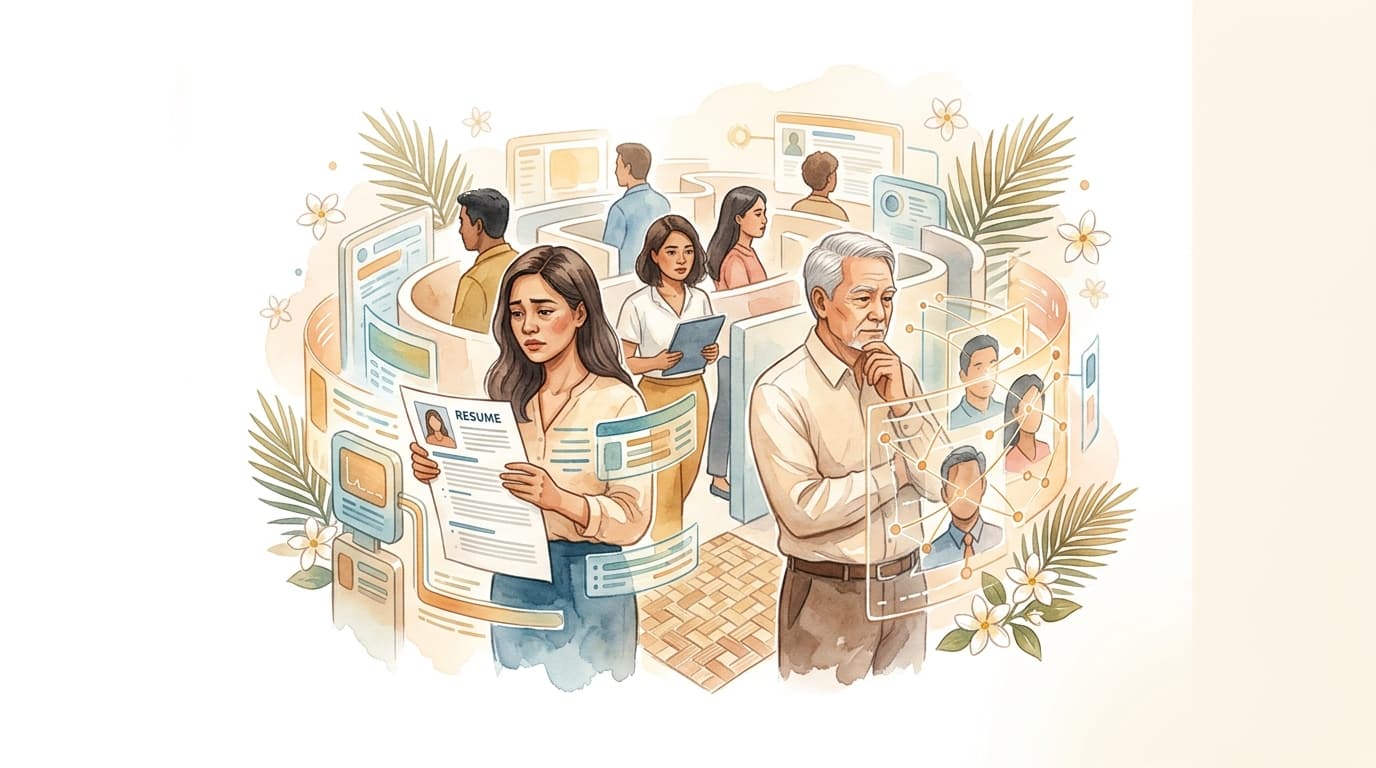
AI Creating Headaches for Job Seekers and Recruiters in New Zealand, Philippines, and Australia
Artificial intelligence (AI) in recruitment is making job hunting increasingly difficult and dehumanising for applicants in New Zealand, while also posing challenges for employers. The Philippines faces high exposure to generative AI in its labour market, indicating a global trend that Filipino job seekers and businesses must adapt to.
Job hunting in New Zealand has become a frustrating and often opaque process for many, including Filipino migrants and professionals. Applicants report feeling dehumanised by artificial intelligence (AI) screening methods, often unsure if their cover letters and CVs are being reviewed by human eyes or algorithms. This uncertainty adds a layer of stress to an already competitive job market, where some positions attract hundreds of applications, making AI screening almost inevitable for employers.
The difficulty in navigating AI-driven recruitment has led to a surge in demand for professional CV writing services. Businesses like one in Te Awamutu have seen a 50% increase in customers, including senior professionals and those recently made redundant, all seeking tailored documents to pass algorithmic filters. These CVs are scanned for specific keywords, job titles, and formatting, with any mismatch potentially leading to instant rejection, regardless of a candidate's actual capability, creating a significant barrier for all job seekers, including Filipinos aspiring to work in New Zealand or Australia.
The challenges aren't limited to job seekers; employers and recruitment agencies are also struggling. Despite the promise of AI to streamline hiring, many businesses find that these tools are not yet delivering significant productivity gains and can even add steps to the recruitment process. They face the daunting task of sifting through a deluge of applications, some of which may be AI-generated, making it difficult to spot genuine candidates and contributing to a disconnect between employers and potential employees.
For Filipino professionals and the Philippine economy, the adoption of generative AI carries significant implications. According to the International Labour Organization, over a quarter of employment in the Philippines, impacting 12.7 million jobs, is exposed to generative AI. This exposure rate is the highest among ASEAN countries, particularly affecting the crucial information technology-business process management (IT-BPM) sector. This means that Filipinos seeking employment, whether domestically or as overseas workers in countries like New Zealand and Australia, will increasingly need to understand and adapt to AI-driven recruitment practices.
The complex job market in New Zealand, compounded by AI screening challenges, may also influence migration patterns. Reports indicate a notable exodus of migrants from New Zealand to Australia, where recruiters are actively targeting job seekers with attractive offers, including higher wages and better superannuation. For Filipinos weighing their options, the difficulties in securing employment in New Zealand, alongside the general trend of AI impacting job markets globally, could make Australia a more appealing destination, highlighting the need for adaptability and strategic job application approaches in an evolving technological landscape.
Key facts
- New Zealand job seekers report feeling dehumanised by AI screening, struggling to tell if their applications are being reviewed by algorithms.
- The NZ unemployment rate slightly eased to 5.3% in Q1 2026, but youth unemployment (15-24) rose to 14.4%.
- A CV-writing company in Te Awamutu, New Zealand, reported a 50% increase in customers as job seekers seek professional help to bypass AI algorithms.
- Over one-quarter of employment in the Philippines, equivalent to 12.7 million jobs, is exposed to generative AI, the highest rate among ASEAN countries with comparable data.
Official sources
Kislap reports this story for general information only. Nothing here is immigration, legal, financial, tax, medical, employment, or other professional advice; check official sources and speak with a qualified professional before acting.