

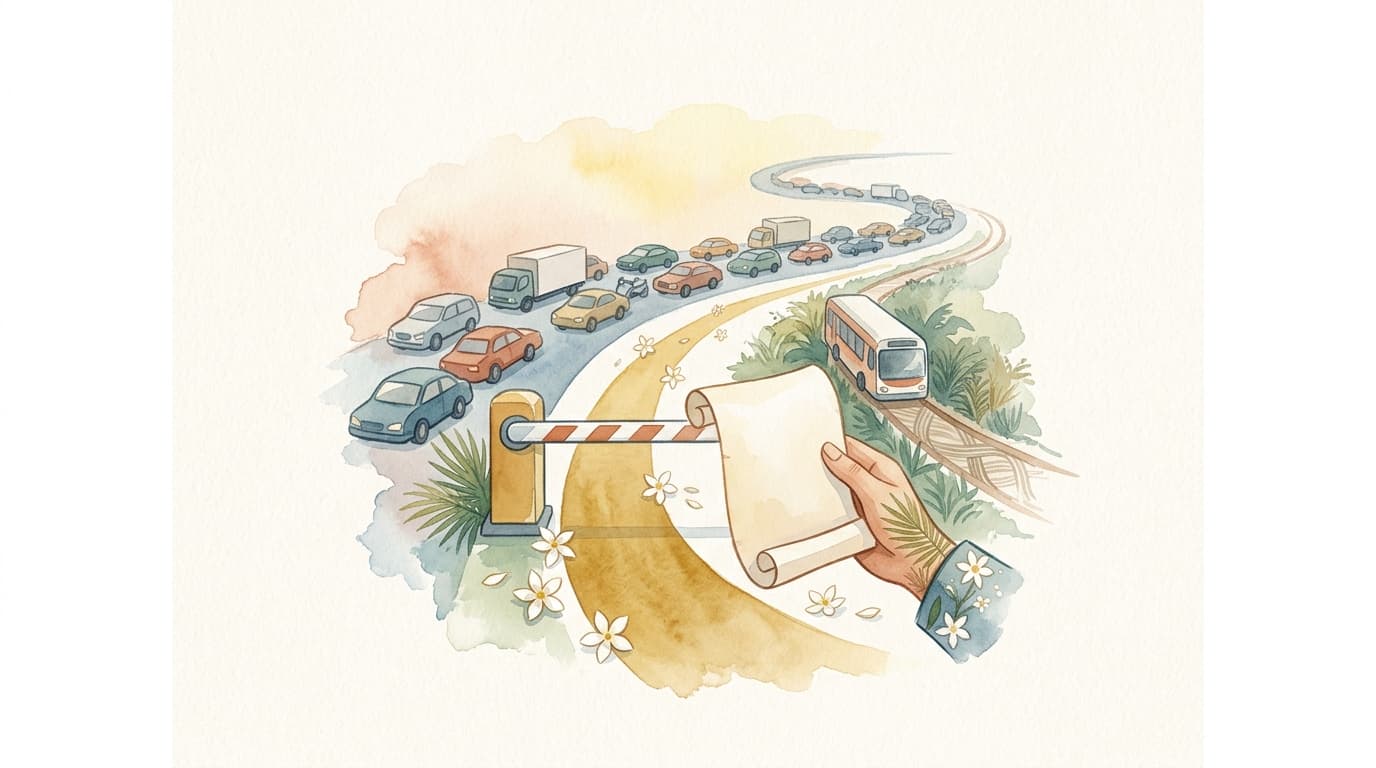
Auckland Advances Congestion Charge Plan for Consultation, Details on Public Transport Still Missing
Auckland Council's transport committee has approved three congestion charging options for public engagement in November, signaling a shift towards city centre cordons, but crucial details on expanded public transport and revenue use remain unclear.
Auckland's journey towards implementing congestion charging has reached a pivotal stage, with the city's transport committee approving three refined options for public engagement slated for November. This development marks a significant step, as the proposal has evolved from initial concepts of charging specific motorways to a more comprehensive cordon-based system around the city centre and possibly core motorways. While the proposed price per trip, ranging from NZ$2 to $7, is yet to be finalised, the structure of the charge aims to address the persistent traffic congestion that impacts daily commutes and economic activity across the city.
The shift to a cordon-based approach, where drivers pay to enter a designated zone, comes after council modelling highlighted a 'rat-run' effect with targeted motorway charges, where drivers simply diverted onto local streets, exacerbating congestion in residential areas. This evolution aligns with earlier expert assessments and policy frameworks, such as those discussed in 'The Congestion Question' report and Auckland Transport's own options assessment, which have explored various pricing schemes and their potential impacts on network performance and local economies.
A critical concern for many Aucklanders, particularly Filipino commuters, workers, and families, is the lack of clarity regarding complementary public transport. Successful congestion charging schemes in cities like London and Stockholm were accompanied by significant expansions in public transport services. While Auckland's City Rail Link (CRL) is set to open later this month—expected to double the number of people within a 30-minute train ride of the city centre—the current plan provides no specific details on how extra buses or feeder services would be introduced. Without robust alternatives, the effectiveness of the charge in encouraging mode shift remains uncertain, directly impacting those who may need to switch from driving.
The distinction between a 'congestion charge' and a mere 'toll' is crucial. A true congestion charge aims to change behaviour by providing viable alternatives, ensuring that those who must drive (like cleaners working early shifts or plumbers whose vans are essential for their jobs, common roles for Filipino migrants) have a clear benefit, such as faster travel times. The Land Transport Management (Time of Use Charging) Amendment Bill, enacted to enable such charges, exempts emergency vehicles and buses, but questions remain about the impact on essential tradespeople. While council modelling suggests faster business car trips, the benefit only materialises if roads truly clear, which depends heavily on public transport capacity.
Moreover, questions regarding the allocation of revenue generated by the charge remain unanswered. While the legislation stipulates that funds must first cover scheme costs and then be reinvested into land transport within the region, the specific division among the NZ Transport Agency, Auckland Council, and local boards has not been disclosed. Transparency in revenue use has been identified in international examples, such as London and New York, as vital for public buy-in, with revenue often explicitly dedicated to public transport improvements. For Filipino households and businesses managing daily expenses, knowing how their contributions will directly enhance their transport options is a key factor in accepting the new system.
Key facts
- Auckland Council's transport committee has signed off three options for a congestion charge, set for public consultation in November.
- The proposed charge, ranging from NZ$2 to $7 per trip, currently focuses on cordons around the city centre and potentially core motorways, moving away from earlier targeted motorway charges.
- Auckland's plan lacks specific details on how public transport, including buses and feeder services, will be expanded, improved, or kept affordable to support a shift away from driving.
- Unanswered questions persist regarding the allocation of revenue, which under existing legislation, must first cover scheme costs and then fund land transport within the region.
Official sources
Kislap reports this story for general information only. Nothing here is immigration, legal, financial, tax, medical, employment, or other professional advice; check official sources and speak with a qualified professional before acting.