

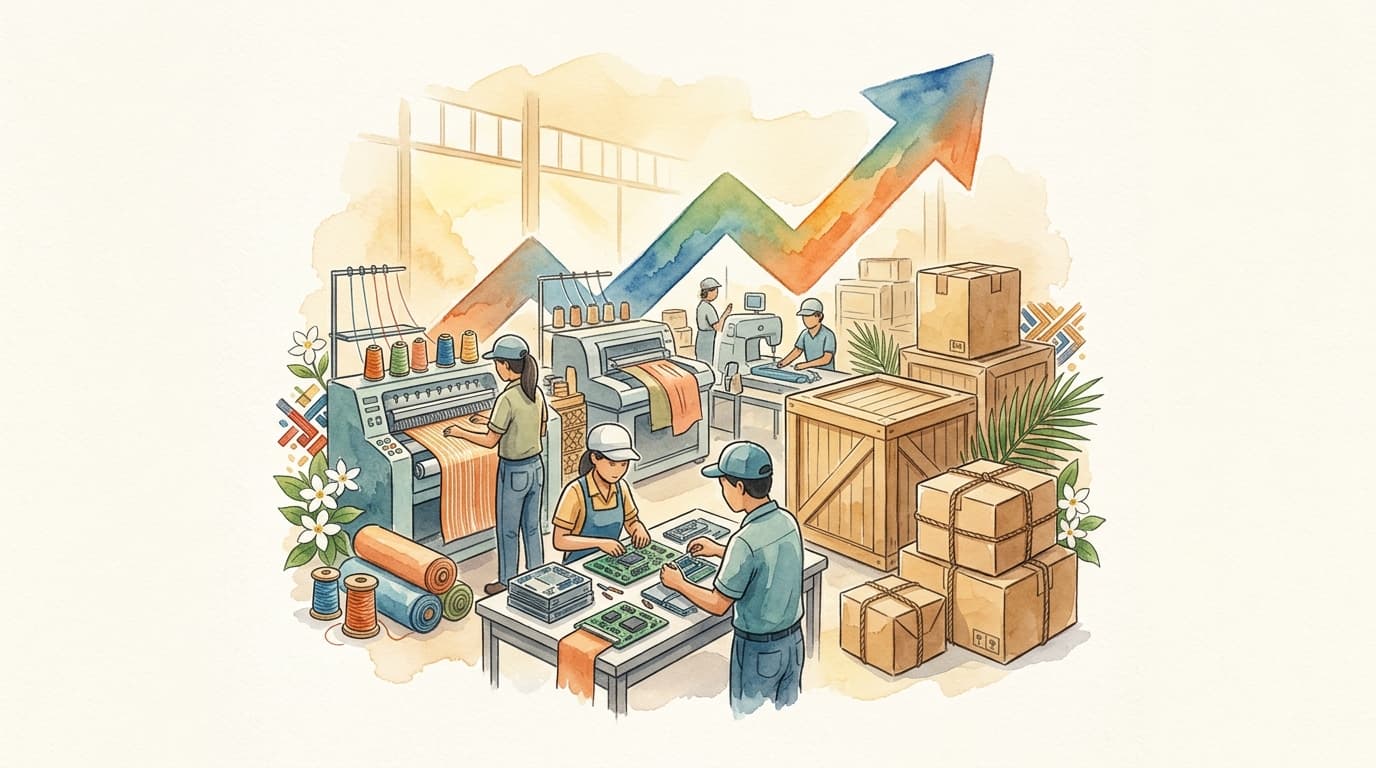
Philippine Factory Output Surges to Over Two-Year High in March 2026
Philippine manufacturing output reached a more than two-year high in March 2026, driven by increased production and proactive measures by manufacturers amidst global uncertainties. This robust growth offers a snapshot of the country's industrial resilience.
The Philippine manufacturing sector demonstrated strong performance in March 2026, with its output accelerating to a more than two-year high. Data from the Philippine Statistics Authority (PSA) shows the Volume of Production Index (VoPI) expanding by 7.8% year-on-year, a significant turnaround from the previous year's decline.
This robust growth marks the strongest reading since September 2023 and extends the VoPI's positive streak to eleven consecutive months. The expansion also exceeded February's growth, indicating a sustained upward trend in the country's industrial activity. Furthermore, the average capacity utilization across all industries increased to 78.5%, with high utilization rates reported across the board.
The PSA attributed this surge primarily to significant upticks in basic metals, transport equipment, and computer, electronic, and optical products. Economic experts also noted that steady interest rates and mild inflationary pressures encouraged manufacturers to front-load production and stockpile inputs, partly in anticipation of potential disruptions from the Middle East crisis.
The Bangko Sentral ng Pilipinas (BSP) played a role in maintaining economic stability by keeping its policy rate unchanged at 4.25% in March. This decision, made during an off-cycle meeting, aimed to reassure markets grappling with uncertainty stemming from global geopolitical events.
Despite the strong performance, the outlook for the coming months remains cautious. The ongoing Middle East conflict is expected to weigh on investment and costs, prompting some experts to anticipate potential production declines across industries if inflation surges and exerts upward pressure on interest rates.
For Filipino households and consumers in New Zealand, and especially for businesses importing goods from the Philippines, these developments signal a complex environment. While current output is strong, the Philippines' heavy import dependency makes it vulnerable to global crises, potentially impacting exchange rates and the cost of imported goods in the future. Monitoring these global economic shifts will be crucial for managing potential impacts on supply chains and prices.
Key facts
- The Volume of Production Index (VoPI) for Philippine factory output grew 7.8% year-on-year in March 2026, marking its strongest performance since September 2023.
- This growth reversed a 0.6% decline from March 2025 and surpassed February 2026's 3.1% expansion, sustaining positive territory for the 11th consecutive month.
- Average capacity utilization across industries rose to 78.5% in March 2026, with all divisions reporting rates above 65%.
- Key contributors to this growth included basic metals, transport equipment, and computer, electronic, and optical products, alongside manufacturers bracing for the economic fallout of the Middle East crisis.
Official sources
Kislap reports this story for general information only. Nothing here is immigration, legal, financial, tax, medical, employment, or other professional advice; check official sources and speak with a qualified professional before acting.
Discuss this story
Install on your websiteAdd context, ask questions, or share verified updates that help readers understand this story.