

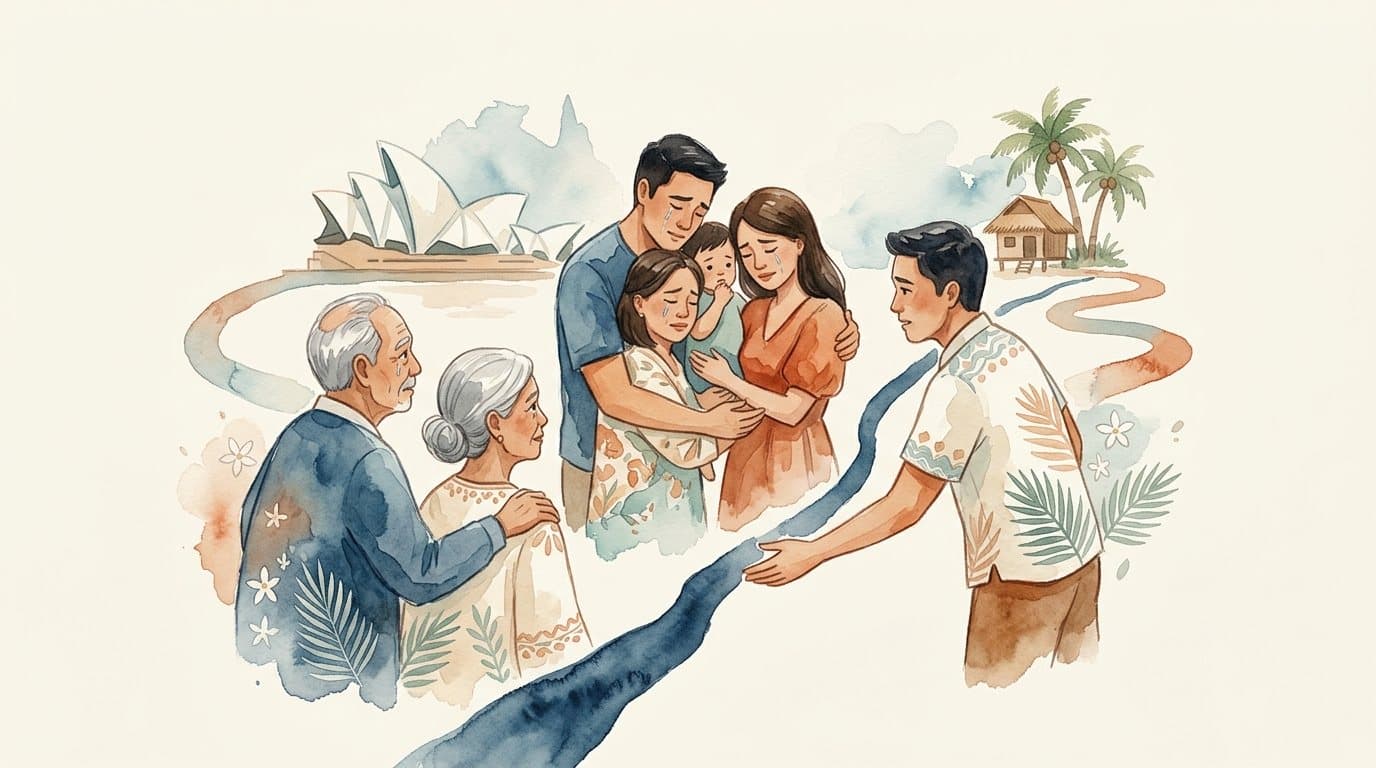
Australia's New Visa Rule Forces Separation for Filipino Families Awaiting Parent Visas
New "no further stay" conditions on Australian visitor visas are preventing elderly parents from remaining in the country while their parent visa applications, which can take decades to process, are decided, creating an impossible choice for many families, including Filipinos.
New "no further stay" conditions applied to Australian visitor visas are creating significant challenges for families, including many Filipino migrants, hoping to reunite with their ageing parents. Announced in September as part of federal government efforts to reduce net overseas migration, this measure prevents visitor visa holders from applying for any other visa while remaining in Australia, effectively closing a previous pathway for parents awaiting long-term residence. This forces parents to leave Australia and wait overseas for visa processing that can span decades, putting immense strain on family reunification.
Previously, parents meeting age requirements could enter Australia on a visitor visa, apply for a parent visa onshore, and stay on a bridging visa during processing. This allowed families to remain together, especially as parents aged. However, registered migration agents, like Melbourne-based Gary Grewal, note that this change unintendedly impacts genuine families, requiring parents to return to their home countries, such as the Philippines, and endure prolonged separation while their applications are reviewed.
The wait times for Australian parent visas are exceptionally long and costly. The Contributory Parent visa, priced around A$49,000, has an estimated processing time of 18 years. The more affordable Aged Parent visa, for parents eligible for pension age, can take more than 42 years to process. These extensive delays have led to tragic outcomes, with reports indicating over 1,500 applicants died waiting in a 21-month period, as highlighted by The Guardian, and cases like Jen's mother who passed away before her visa was approved after an eight-year wait, according to SBS News.
Such prolonged separation takes a significant emotional and practical toll on families. Many, including those within the Filipino diaspora in Australia who value multi-generational care, are now confronted with the difficult choice of either living apart from their ageing parents or relocating their entire families overseas. This situation, where applicants' lifespans are often shorter than the visa processing times, underscores broader calls for greater consistency, transparency, and compassion within Australia's family visa system, as reported by SBS Punjabi and noted in a parliamentary committee report on family and partner visas.
Key facts
- Australia's new "no further stay" condition on visitor visas now prevents parents from applying for another visa, such as a parent visa, while already in Australia, forcing them to wait offshore.
- This policy change, aimed at reducing net overseas migration, eliminates a crucial pathway previously used by families to keep ageing parents in Australia during lengthy parent visa processing.
- Contributory Parent visas currently have an estimated processing time of 18 years and cost around A$49,000, while the Aged Parent visa can take over 42 years, leading to applicants dying before a decision is made.
- Parliamentary inquiries and media reports highlight the complex, non-transparent nature of Australia's family visa system and tragic cases of applicants passing away during prolonged waits.
Official sources
Kislap reports this story for general information only. Nothing here is immigration, legal, financial, tax, medical, employment, or other professional advice; check official sources and speak with a qualified professional before acting.