

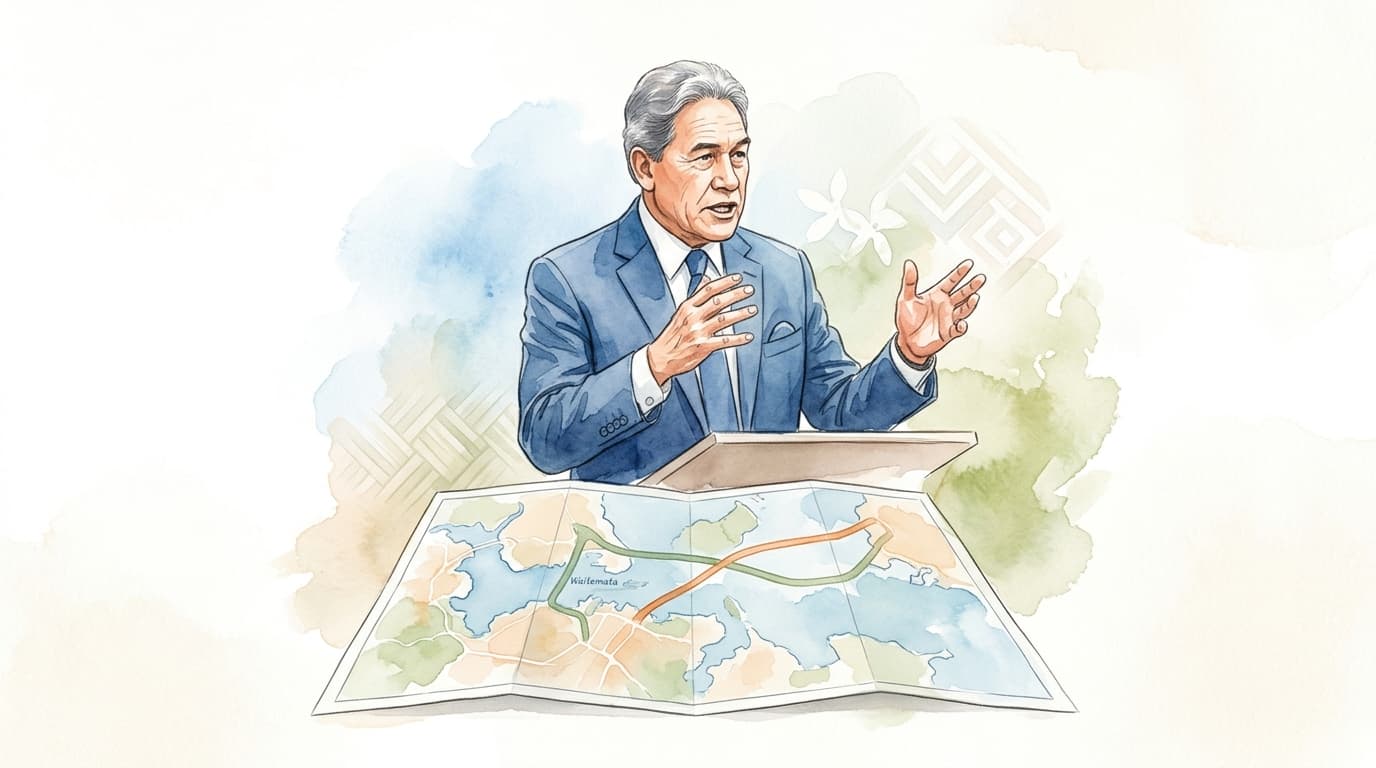
NZ First Leader Opposes New $1M Meola Reef Harbour Crossing Study in Auckland
New Zealand First leader Winston Peters has publicly expressed strong opposition to the Government's new $1 million feasibility study into a second Auckland harbour crossing via Meola Reef, despite Cabinet's collective agreement. The study, jointly funded by the Government and Auckland Council, aims to explore a potentially lower-cost alternative route, which has significant implications for Auckland's future transport network.
A significant political division has emerged over the proposed second Waitematā Harbour crossing in Auckland, with New Zealand First leader Winston Peters publicly opposing the recently announced $1 million feasibility study for a Meola Reef route. Peters characterized the study as a "gross, shocking waste of money," despite the collective responsibility doctrine meaning Cabinet, including NZ First members, had agreed to it just weeks prior. This debate signals ongoing complexities in planning Auckland's critical infrastructure projects.
Peters argued for an alternative approach, advocating for an open tender process where infrastructure builders would access all available information through the Government Electronic Tendering System. These firms would then assess and propose the most cost-effective solutions for moving people across the harbour, with the government and Auckland Council selecting the best proposal. Peters indicated an openness to partially subsidising such exploratory work, citing past examples of what he termed "wasted" money on major projects like Auckland light rail and Transmission Gully.
The feasibility study, jointly funded by the Government and Auckland Council, marks a formal consideration of Mayor Wayne Brown’s long-preferred Meola Reef bridge route. Historical documents, such as a 1997 study by Auckland Regional Council/Opus, show the Meola Reef option (Option 9) was previously considered for a highway bridge, but was discounted due to severe environmental impact, disruption, and significant engineering challenges, including its length and steep terrain. The current study aims to determine if the natural lava flow at Point Chevalier offers a viable, lower-cost alternative to expensive tunnel options.
Transport and Infrastructure Minister Chris Bishop confirmed that Cabinet had collectively agreed to the study, asserting it was "the right thing to do" for the country's largest city. Auckland Mayor Wayne Brown, a long-time proponent of the Meola Reef option, welcomed the study, expressing frustration over previous spending on consultant-driven reports. He also indicated his openness to Peters’ suggestion of putting the project out for tender if it could reduce costs and expedite construction.
For Filipino households and businesses in Auckland, the ongoing debate and potential for a second harbour crossing hold significant implications. Efficient transport infrastructure is vital for daily commutes, accessing employment, and ensuring the smooth flow of goods and services. Prolonged planning disputes, cost overruns, and delays in critical projects can impact taxpayer funds, contribute to traffic congestion, and affect the broader economic environment, directly influencing the cost of living and operational expenses for many, including Filipino entrepreneurs and families establishing roots in the city.
Key facts
- New Zealand First leader Winston Peters stated his party opposed the new $1 million feasibility study for a second Auckland harbour crossing via Meola Reef, deeming it a "gross, shocking waste of money."
- Despite Peters' dissent, Cabinet collectively agreed to the study, which will split costs with Auckland Council to formally investigate Mayor Wayne Brown’s long-preferred Meola Reef route.
- Peters proposed an alternative method, suggesting an open tender process for infrastructure builders to assess information and propose cost-effective solutions, potentially with partial government subsidy.
- Transport Minister Chris Bishop affirmed Cabinet's decision, calling the study "the right thing to do," while Auckland Mayor Wayne Brown welcomed the move and expressed openness to Peters' tendering proposal.
- The study aims to determine the viability of Meola Reef's natural lava flow as a lower-cost alternative to previously favored multibillion-dollar tunnel options, which could impact future infrastructure investments.
Official sources
Kislap reports this story for general information only. Nothing here is immigration, legal, financial, tax, medical, employment, or other professional advice; check official sources and speak with a qualified professional before acting.